How Safe is Safe?
A guide to understanding Diverted Neutral Current and its impact on electrical safety
Impact on Other Trades
Diverted Neutral Current (DNC) and Net Currents (NET) don’t just affect electricians – they create real, documented risks for gas engineers, plumbers, heating technicians, and safety inspectors who routinely work on metallic pipework and appliances. Because these trades often handle bonded metalwork, they can unknowingly come into contact with energised components if diverted neutral current is present.
Risks to Gas Engineers & Plumbers
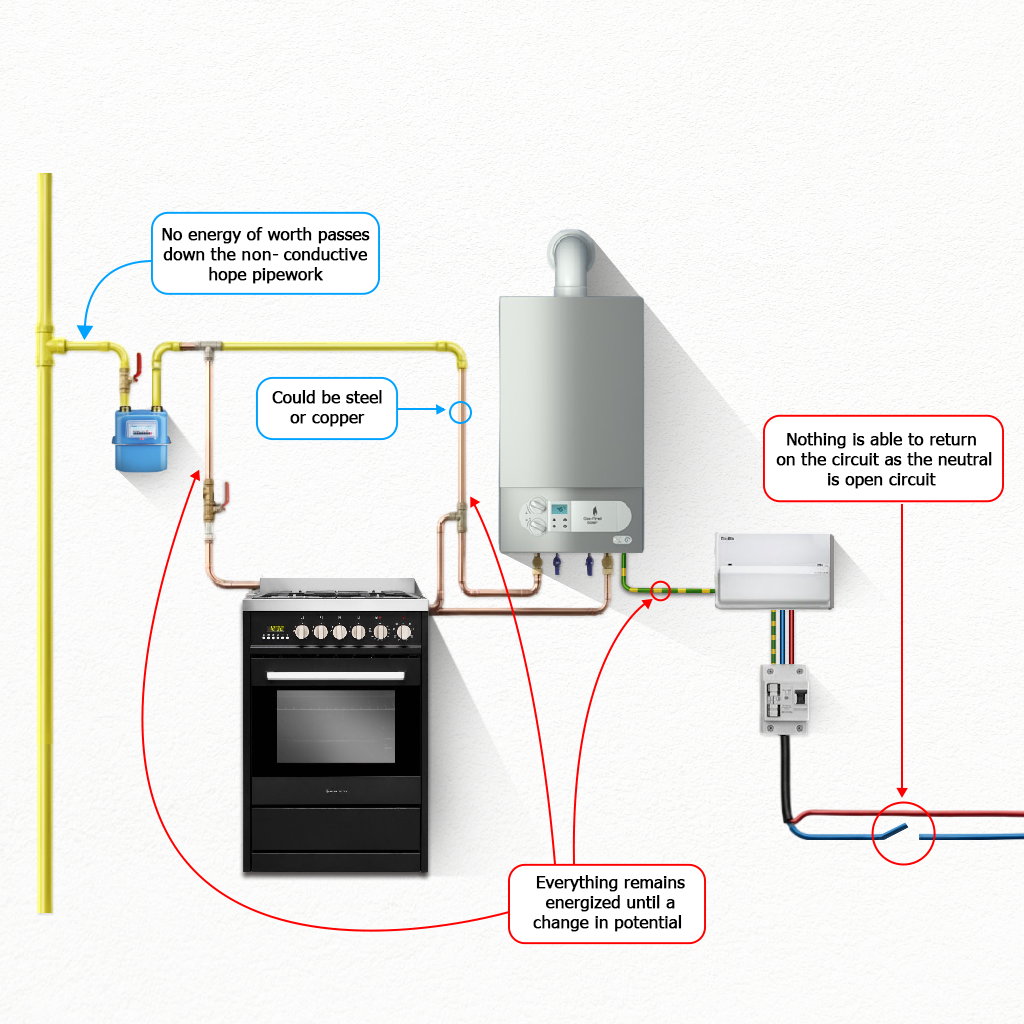
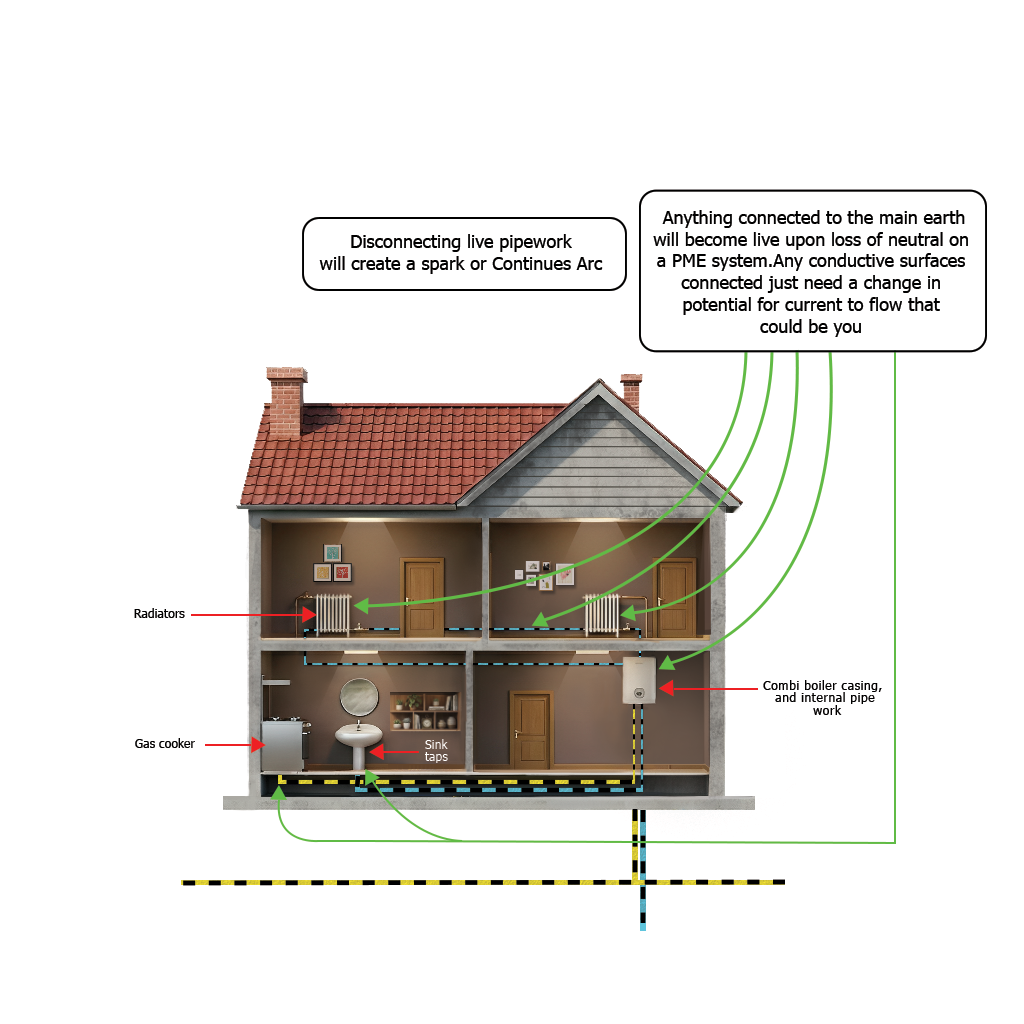
Modern combi boilers contain a metallic joining plate that links copper pipework, the boiler chassis, and internal components. When DNC is present, this plate can become an unintended return path for neutral current.
During maintenance – especially when disconnecting or separating pipework – engineers have reported receiving electric shocks because the pipework was carrying diverted neutral current.
Industry safety bulletins have highlighted that metallic gas and water pipes can carry several amps of current under fault conditions, particularly in older PME‑supplied properties or where bonding is degraded.
Risks to Gas Safety Inspectors
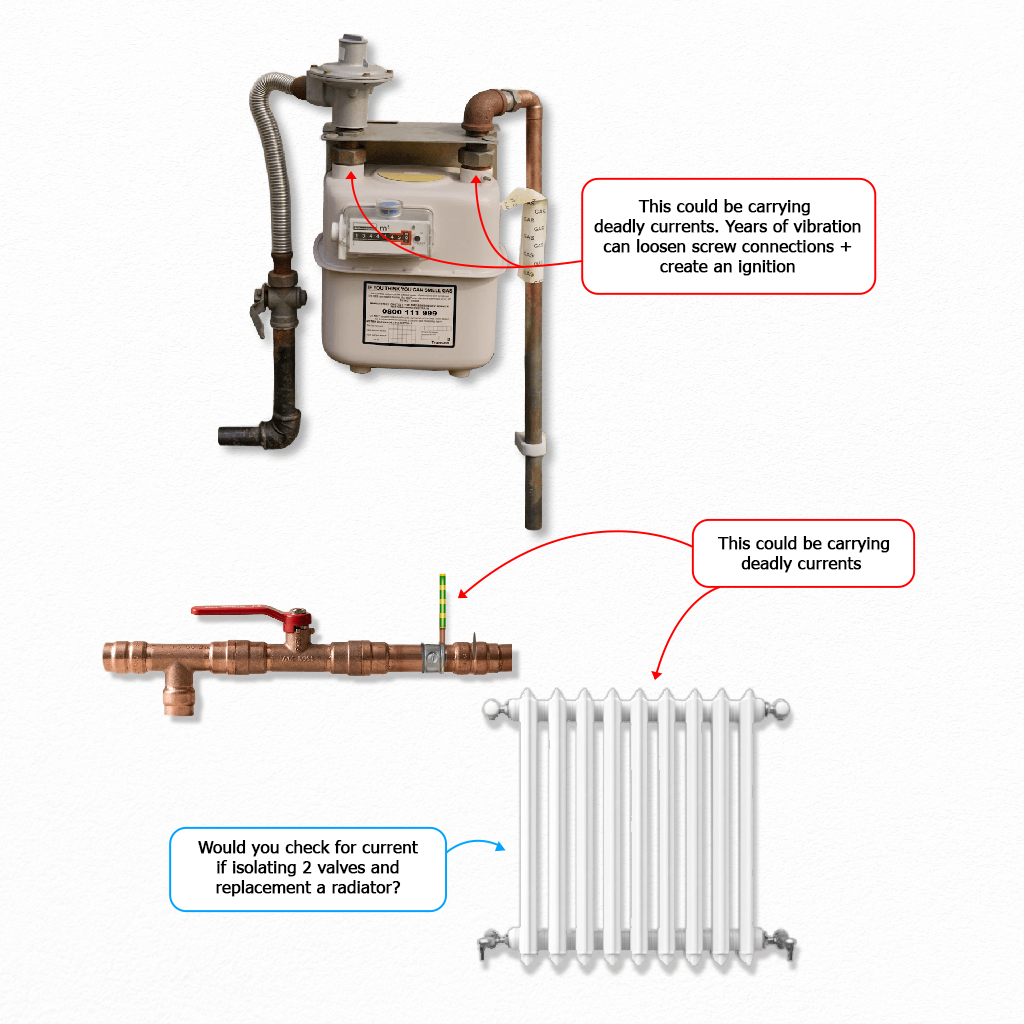
When investigating gas leaks, fires, or explosion incidents, inspectors increasingly consider electrical factors such as stray neutral current, elevated touch voltages, or overheated bonding conductors.
🔥 DNC can contribute to joint heating, pipework damage, or accelerated corrosion, all of which may worsen the severity of a gas‑related incident.
💥In some cases, diverted neutral current has been identified as a contributing factor in pipework failures and unexpected ignition sources.
Why Cross-Trade Awareness Matters
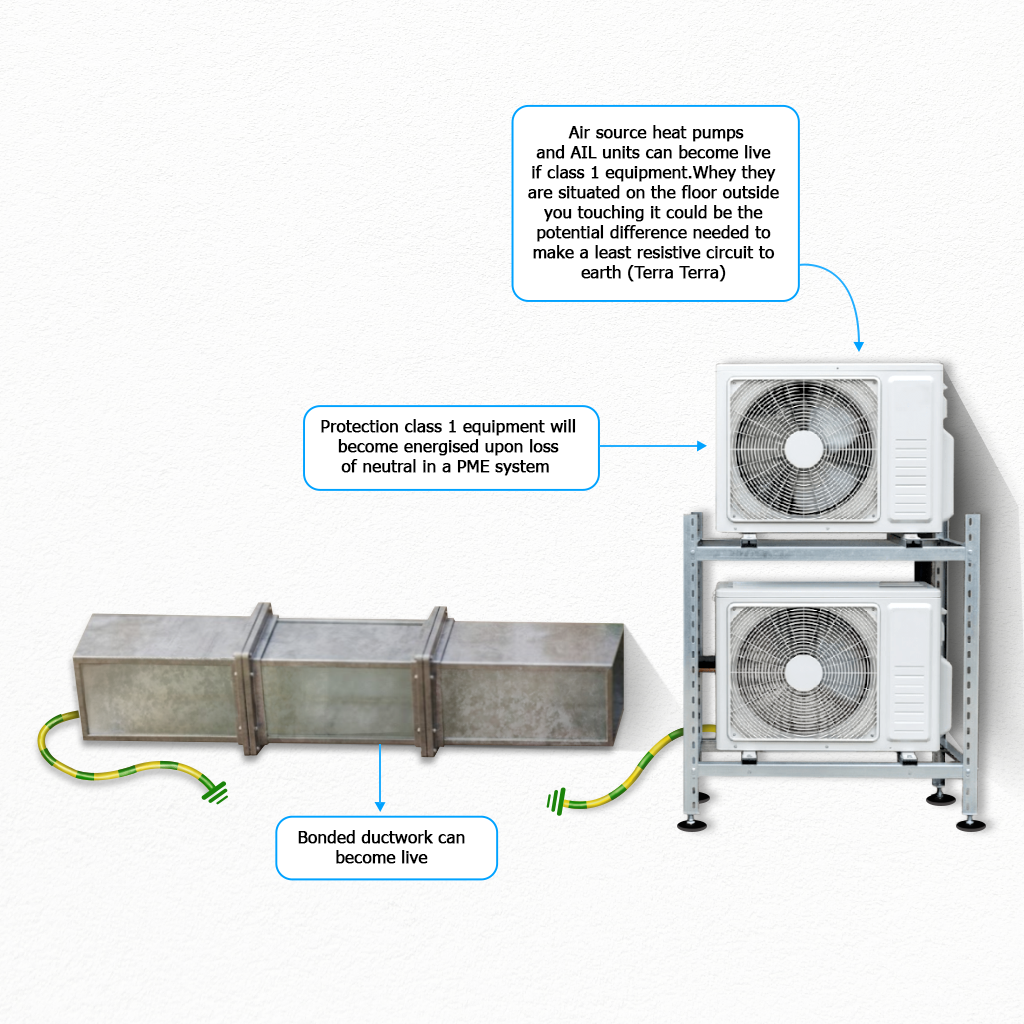
Many properties – especially older housing stock – still rely on PME systems where neutral integrity is critical.
Critical Note: If the PEN or neutral conductor becomes high‑impedance or partially broken, neutral current seeks alternative return paths, often through bonded pipework.
Gas engineers and plumbers are therefore at risk even when performing routine tasks such as:
- Removing boilers
- Cutting or modifying pipework
- Replacing radiators
- Working on metallic gas meters or regulators
Safe Isolation and DNC
Current safe isolation practices used by electrical contractors were developed around the assumption that the neutral and earth conductors remain stable, passive, and at or near true earth potential. However, the increasing prevalence of Neutral Current Diversion (NCD) and Diverted Neutral Current (DNC) means this assumption is no longer reliable. Modern installations – particularly those supplied via PME/TN‑C‑S systems – can present conditions where the earth and bonding conductors carry significant current and may rise to hazardous voltages.
Why Traditional Safe Isolation is Insufficient
Traditional isolation procedures focus on disconnecting the live conductors and verifying the absence of voltage. But DNC introduces a new risk:
- A diverted neutral current may initially appear harmless, with only a small voltage present.
- If the supply neutral deteriorates further or fails completely, that same conductor can rapidly rise to dangerous touch voltages.
- As a result, the earth conductor must now be treated as a potentially live conductor, similar to a neutral under fault conditions.
Critical Warning: HSE incident summaries, and DNO safety bulletins – highlight that diverted neutral currents have caused shocks during isolation, bonding work, and even routine maintenance on metallic pipework.
The Need for Revised Disconnection and Separation Procedures
Because Diverted Neutral Current (DNC) can energise metalwork unexpectedly, safe isolation procedures must now go far beyond simply switching off the live conductors at the intake position. Modern installations contain multiple energy sources, bidirectional power flows, and parallel neutral paths that can all contribute to hazardous touch voltages. As a result, safe isolation must ensure that every possible source of electrical energy is securely disconnected and separated, including:
⚡ Live conductors
⚡ Neutral conductors
which may rise to dangerous voltages if the supply neutral becomes high‑impedance or fails
⚡ Earthing and bonding conductors
which may be carrying diverted neutral current or forming unintended return paths
💡 This reflects modern safety thinking: total separation, not just “switch off the live”.
Why This Matters in Today's Installations
Traditional safe isolation guidance was written for a world where the intake position was the single point of energy entry. That world no longer exists. Today’s installations may include:
☀️ Solar PV systems capable of back‑feeding into circuits even when the main switch is off
🔋 Battery Energy Storage Systems (BESS) that can energise circuits independently of the grid
🚗 EV charge points with internal contactors, PEN‑fault detection devices, and bidirectional charging capability (V2L/V2G)
⚡ Multiple distribution boards (DBs) with interlinked bonding and shared neutrals
🔄 Load‑shedding or load‑transfer systems that can automatically re‑energise circuits
Each of these can maintain or reintroduce dangerous voltages during isolation unless properly controlled.
Safe Isolation Must Now Begin Before Reaching the Intake
Before attempting to isolate at the main switch or service head, contractors must:
☀️ Shut down and isolate PV inverters
→ PV arrays can continue generating energy whenever illuminated.
→ DC isolators, AC isolators, and inverter shutdown procedures must be followed.
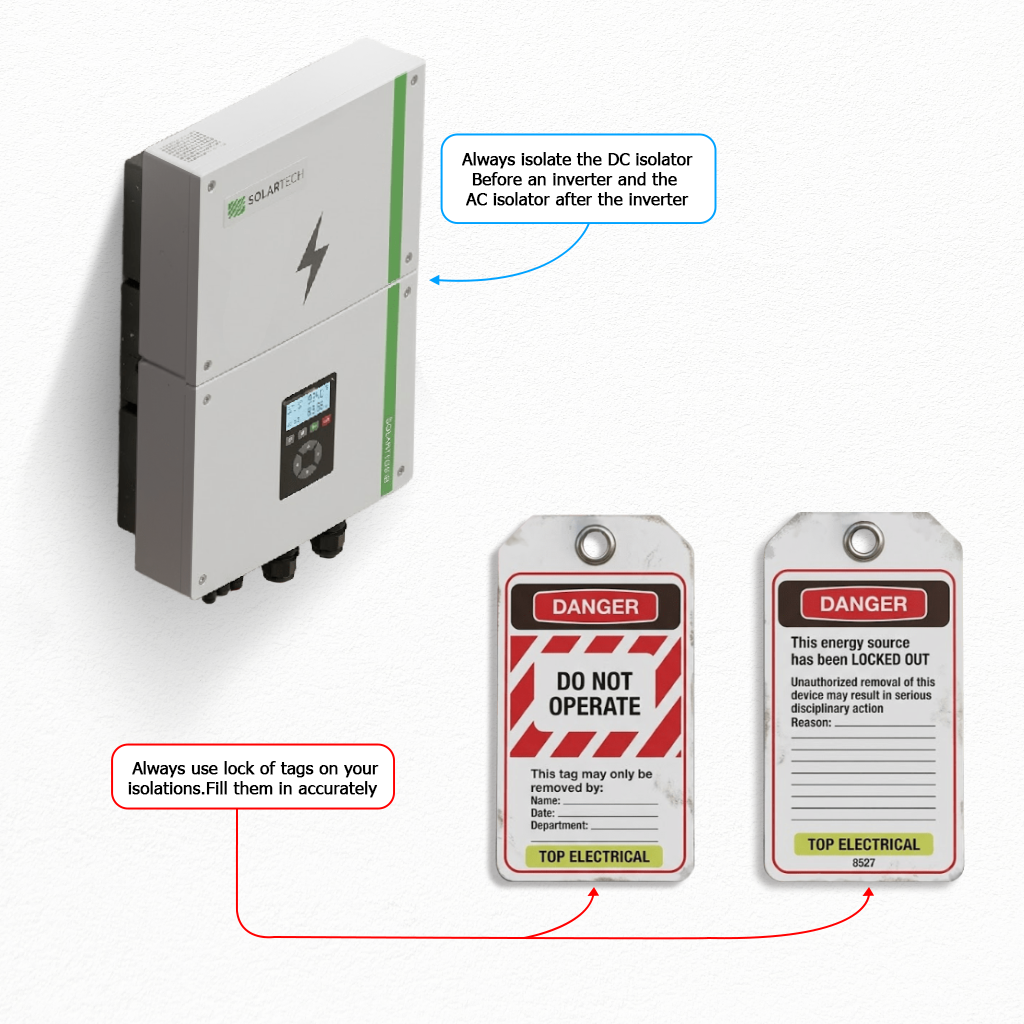
→ Some hybrid inverters can energise circuits even when the grid is down.
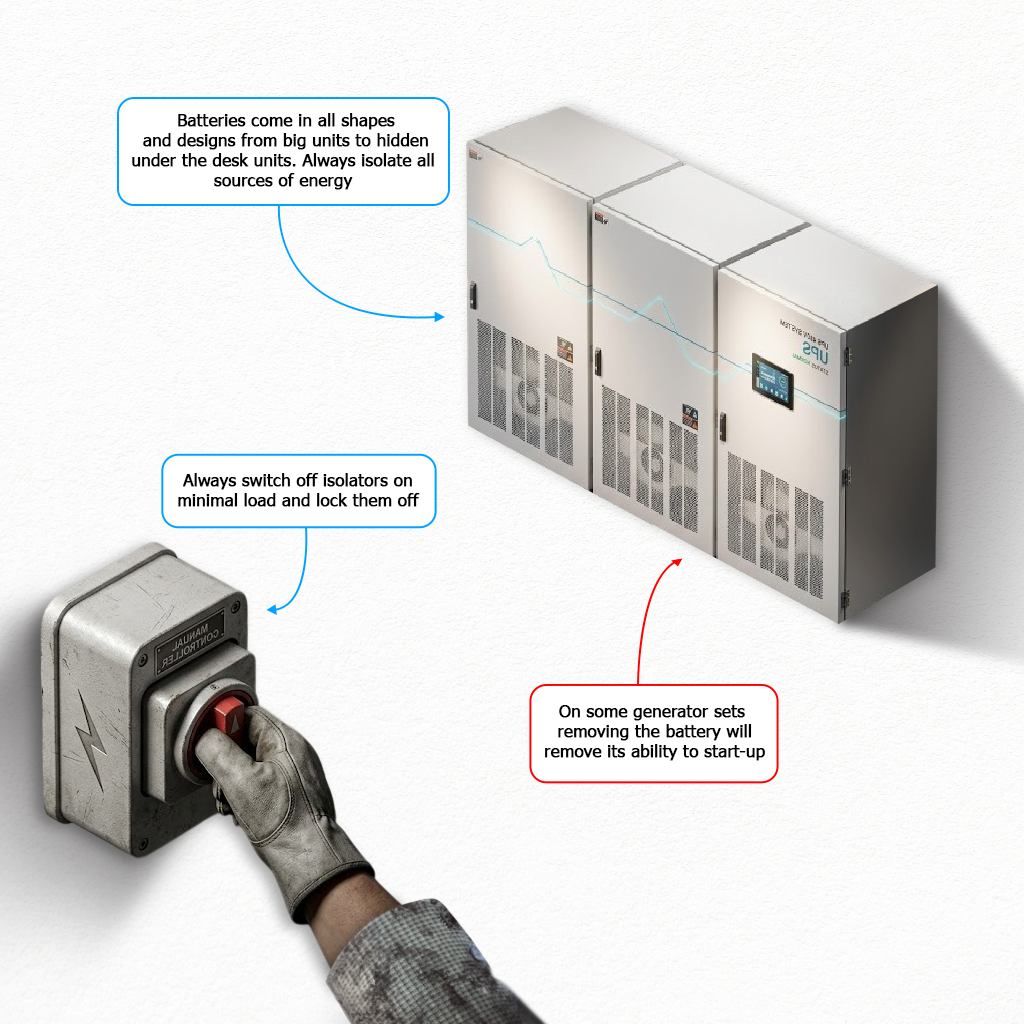
🔋 Isolate BESS systems
→ Batteries can supply significant fault current.
→ Many BESS units have multiple isolation points (DC, AC, emergency shutdown).
→ Some systems automatically reconnect after a delay unless fully isolated.
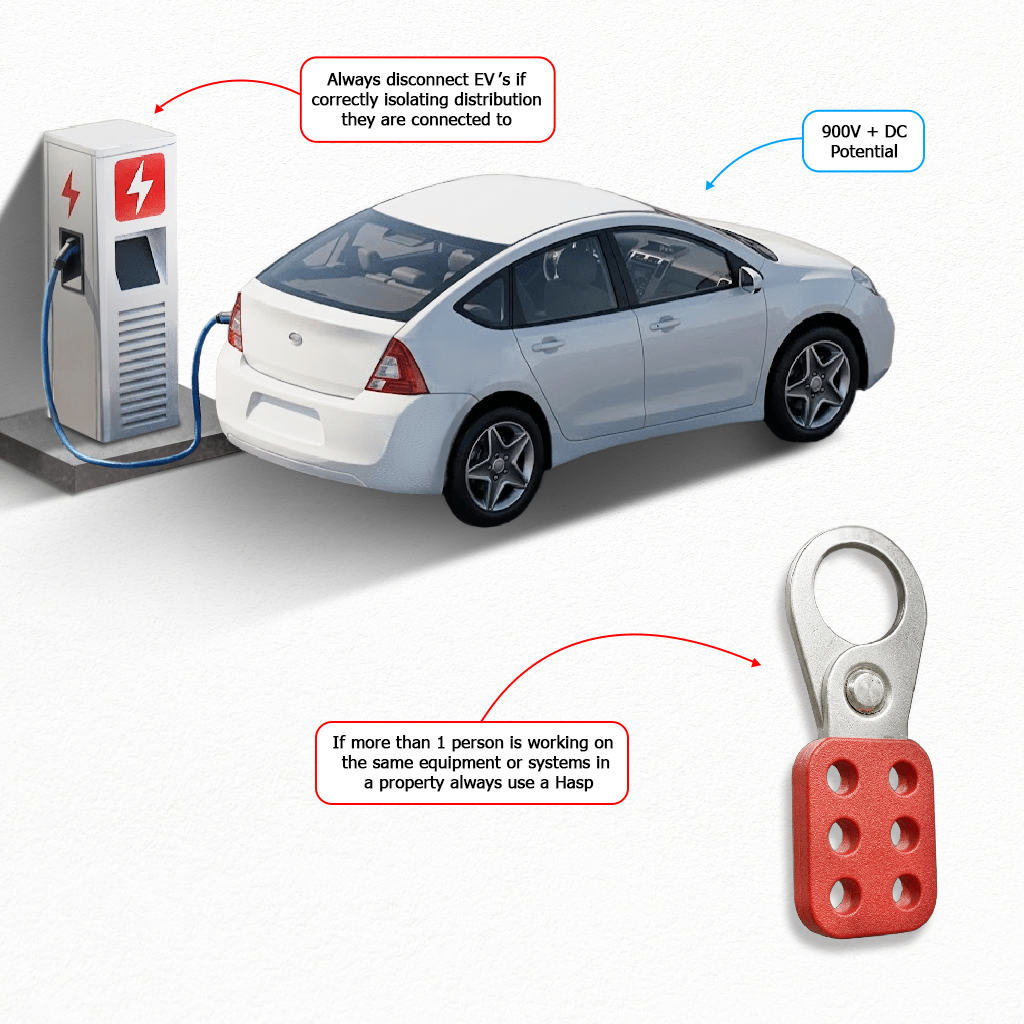
🚗 Disable or isolate EV charge points
→ EV chargers may contain internal relays that close unexpectedly.
→ PEN‑fault detection devices can introduce unexpected voltages during testing.
→ Vehicle‑to‑Load (V2L) and Vehicle‑to‑Grid (V2G) systems can energise circuits independently.
⚡ Shedding loads on other distribution boards
→ In multi‑DB installations, parallel neutral paths can remain energised.
→ Load‑shedding systems, UPS units, and standby supplies must be disabled.
→ Bonded metalwork may still carry diverted neutral current until all DBs are isolated.
Critical Point: Only once all secondary energy sources are isolated should the contractor approach the intake position to isolate the main supply.
Why Neutral and Earth Must Be Treated as Potentially Live
DNC and NET conditions mean:
⚠️ Neutral may not be at zero potential
⚠️ Earth may not be at true earth potential
⚠️ Bonding conductors may carry several amps of diverted current
⚠️ Potential differences can exist between DBs, pipework, and structural steel
Isolating only the live conductors can therefore leave the installation in a dangerously energised state, even though the main switch is “off”.
The New Reality
Modern safe isolation must consider:
✓ Multiple energy sources
✓ Bidirectional power flow
✓ Parallel neutral paths
✓ Automatic reconnection systems
✓ DNC and NET currents energising metalwork
Important: Safe isolation is only one small part of a much bigger issue that the industry rarely acknowledges openly. The rise of diverted neutral current (DNC) and NET currents means that traditional isolation practices – built around the idea that only the live conductors pose danger – are no more. The uncomfortable truth is that neutral and earth can no longer be assumed safe, and the industry has been slow to say this plainly. This shift reflects a growing recognition – quietly acknowledged in technical circles but rarely stated outright – that isolation is no longer a single switch operation. Instead, it must be treated as a staged, system‑wide process that accounts for all conductors, all energy sources, and all potential return paths.
Arc and Thermal Risk Considerations
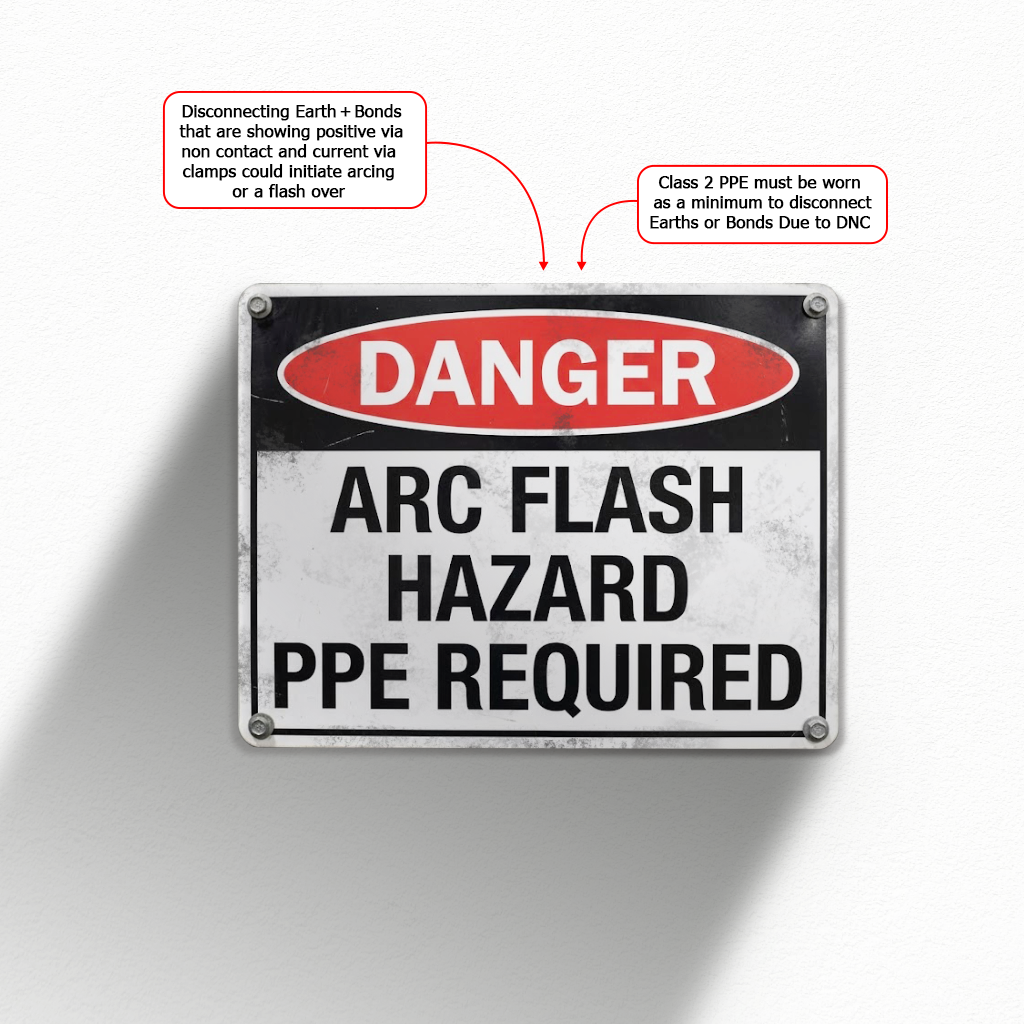
Although arc flash is traditionally associated with high‑energy industrial systems, diverted neutral current can still create hazardous arcing and thermal effects during disconnection. Where bonding or neutral conductors are unintentionally carrying significant current due to DNC, opening these connections can produce noticeable arcing and localised heating – particularly on PME systems with high prospective fault currents.
For this reason, risk assessments – historically focused on live conductors only – should also consider scenarios where neutral or earthing conductors may be carrying unintended current, with appropriate controls for shock, arcing and thermal damage.
Summary
The rise of DNC and NET currents requires a fundamental shift in safe‑isolation thinking:
✓ Earth is no longer guaranteed to be safe.
✓ Neutral cannot be assumed to be at zero potential.
✓ Bonding conductors may carry dangerous current.
✓ Isolation must consider all conductors, not just the live.
✓ Risk assessments must consider scenarios where neutral or earthing conductors may be carrying unintended current, with appropriate controls for shock, arcing and thermal damage.
The Bottom Line: This evolving risk landscape means electrical contractors must update their procedures, training, and risk assessments to reflect the realities of modern PME‑based distribution networks.