Understanding diverted neutral currents and electrical safety in the age of PME.
Our Network Has Changed, But Our Training Hasn't
The UK’s aging PME (TN-C-S) infrastructure combines neutral and earth conductors, creating diverted neutral current paths that pose hidden dangers electricians aren’t being taught to identify.
What is PME?
Why Aren't We Taught This?
THE GOLDEN RULE
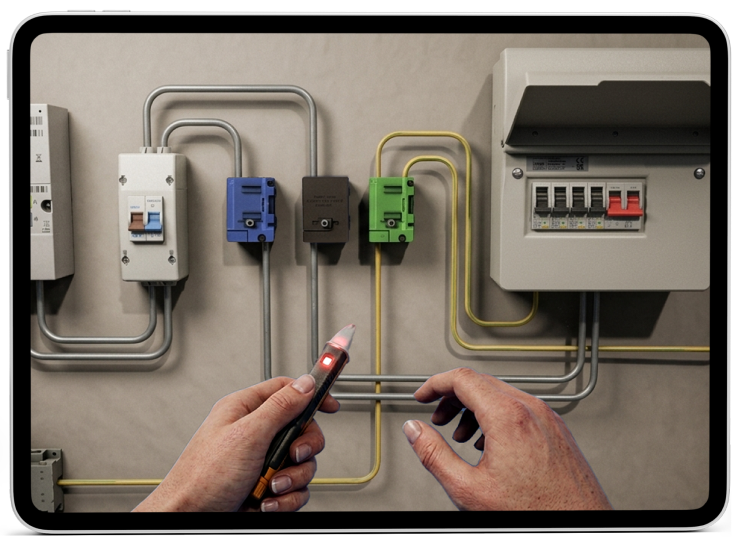
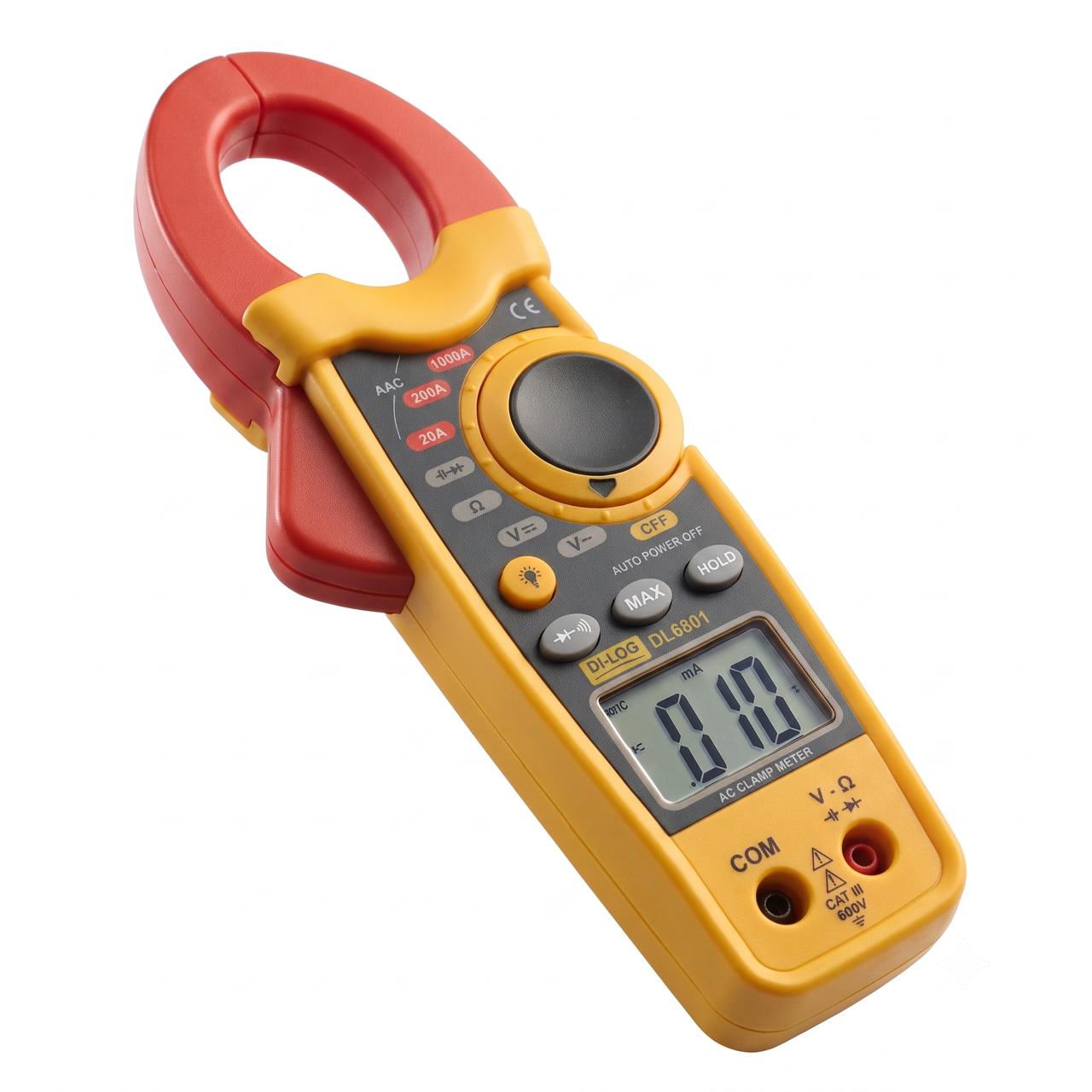
Always Use a Clamp Meter Before Disconnecting
This single practice can save your life. Before disconnecting any main earthing conductor, neutral, or bonding conductor, use a clamp meter to check for current flow. If current is present, the system is NOT safe to work on.
Why it matters: Voltage indicators and isolation devices won’t detect diverted neutral currents. Only a clamp meter reveals current flowing on paths it shouldn’t be—your first and best defense against electric shock.
THE PHYSICAL TRAINING PROBLEM
You Can't Teach This Safely on a Rig. That's Where TradeFox Comes In.
Traditional training methods are fundamentally incapable of teaching this vital skill safely, making simulation not just a “nice to have,” but an absolute necessity.
The Classroom Dilemma
You cannot safely push a 10A diverted neutral current through a classroom training rig without risking student lives.
Physical training equipment simply cannot replicate the lethal conditions students will face on real PME networks—but those networks won’t wait for them to learn.
The TradeFox Solution
TradeFox is the only risk-free way to build the muscle memory required to survive a PEN fault on modern UK networks.
Practice detecting lethal faults. Experience the consequences of failed isolation. All without the real-world hospital visit.
Who Needs to Know This?
Whether you’re just starting out or have decades of experience, understanding diverted neutral currents is essential for your safety.
Apprentices & Students
Working Electricians
Educators & Trainers
Are you a College or Training Provider?
Upgrade your Safe Isolation curriculum today with simulation-based training that protects student lives while teaching real-world hazard detection.
Real Stories from the Field
These hazards aren’t theoretical—they’re happening every day on job sites across the UK.
Anonymous Electrician, Manchester
Experienced contractor, 15+ years
“I disconnected a main bonding conductor on what I thought was an isolated system. Got hit with 80V. If I hadn’t been wearing my gloves, I might not be here. Nobody taught me to check for diverted neutral currents in my training.”
Leading UK Electrical Safety Campaigners
Industry experts and educators
“The industry standard for safe isolation is fundamentally flawed when dealing with PME systems. We need to update our approach to reflect the reality of diverted neutral currents—this isn’t optional anymore.”
Site Supervisor, London
Commercial installations
“Started using clamp meters on every main earth disconnect after this training. Found diverted currents on 3 out of 5 properties we surveyed. It’s everywhere, and we were completely blind to it.”
UK Electrical Safety Research
Industry safety organization
“Field studies show that diverted neutral currents are present in a significant percentage of UK installations. This is not an edge case—it’s a systemic issue that requires immediate industry-wide attention.”
Understanding the Hidden Hazard
Diverted neutral currents pose a serious but often overlooked electrical safety hazard. Our educational campaign aims to raise awareness and provide comprehensive knowledge about this critical issue.
What is this all about?
Discover the fundamentals of diverted neutral currents and why they matter
What is Earth?
BS 7671 defines Earth as zero potential, but the EAWR prosecutes based on real-world danger. Learn why blindly trusting the textbook definition on a TN-C-S network could land you in court—or the hospital.
Learn more →
Raising awareness through simulation training
Through accessible learning materials, expert resources, and community engagement, we’re empowering individuals, electricians, and organizations to recognize, prevent, and address neutral current problems in electrical systems.
POWERED BY
The Solution: TradeFox Simulation Training
Traditional classroom rigs cannot safely replicate a lethal 10A diverted neutral fault. Attempting to do so puts students at risk. TradeFox is the only risk-free way to build the muscle memory required to survive a PEN fault on modern UK networks.
🎯
Interactive Scenarios
Practice complex detection and isolation procedures in a 100% safe, virtual environment.
⚡
Real-World Consequences
Experience what happens when standard isolation fails, without the real-world hospital visit.
Built for Modern Curriculums
Seamlessly integrates into college and contractor safety training programs.
🏫
For Colleges & Training Providers
Future-proof your curriculum. Don’t send students onto PME networks blind. Book a TradeFox integration demo and modernize your Safe Isolation training today.
🔧
For Electrical Contractors
Protect your team and your business. Equip your electricians with TradeFox hazard simulation and reduce liability while modernizing your workforce.
DIVERTED NEUTRAL
UNDERSTANDING THE HAZARD
Safety Training • Learn to identify hidden electrical dangers
TESTING EQUIPMENT
PROPER USE AND TECHNIQUES
Equipment Training • Master essential testing tools and procedures
ISOLATION PROCESS
STEP-BY-STEP GUIDE
Safety Protocol • Follow correct procedures for safe isolation
CRITICAL PROTOCOL
What to Do When You Find a Diverted
Neutral Current
Detection is only the first step. Here’s what happens next.
1
Measure the Current
Use your clamp meter to record the exact current value flowing on the earth conductor, bonding, or structural element.
2
Assess the Severity
Industry guidance suggests the 10A threshold—currents above this level indicate a serious fault requiring immediate DNO notification.
The DNO’s “Safe” Threshold vs. Reality:
The DNO notification threshold is 10A (10,000mA). But it only takes >15mA across the chest to cause a lethal shock. The industry’s “acceptable limit” is over 600 times the lethal dose. If your clamp meter reads unexpected current, breaking that connection could force a lethal voltage through your body.
3
Report to the DNO
Contact your local Distribution Network Operator to report the diverted current. Provide measurements, location details, and any relevant installation information. The DNO is responsible for investigating and rectifying network-side faults.
4
Document Everything
Record your findings, measurements, DNO communication, and any remedial actions taken. Use our Registry to track and share anonymized data with the industry.