Why You REALLY Must Measure Current
– Not Just Voltage – On Gas Installations
Quick Navigation
For years, the gas industry has relied almost entirely on voltage detection to decide whether bonded metallic pipework is electrically safe to touch, disconnect or purge. The standard routine has been simple: wave a volt pen, see less than 12 V and carry on.
That approach is now dangerously outdated.
Modern TNC-S systems, diverted neutral currents, neutral‑to‑earth faults and complex bonding arrangements mean that voltage alone cannot tell you how much electrical energy is present. Without knowing the energy, you cannot know the ignition risk.
“Voltage on its own cannot create a spark; it is simply electrical pressure.”
This is the really important part: A spark comes from energy – NOT just voltage. If you don’t measure current, you have no idea how much energy is available to ignite gas or cause let go issues for children or older persons.
Voltage Is Only Half the Equation- Energy Requires Current
Voltage is electrical pressure. Current is electrical flow. Energy is what creates danger.
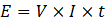
If you only measure voltage, you only know half of the equation.
Two installations can both show 10 V:
- 10 V at 0.01 A → harmless
- 10 V at 10 A → a live fault path capable of arcing, sparking, and igniting gas
Same voltage. 1000× more current. Completely different risk.
Yet the industry still treats both as “safe” because they fall under 12 V. This is the fundamental blind spot.
Equipotential Bonding Does NOT Remove Current
Bonding equalises voltage. It does not stop current.
In TNC-S systems the main earth conductor can carry:
- Diverted Neutral Current (DNC)
- Neutral to Earth Current (NDC)
- Network Earth Touch Current (NET)
When this happens, the gas pipework becomes part of that return path.
“Bonded gas pipework can be carrying several amps of current even when the measured voltage appears low.”
This is the really critical point:
- Low voltage does NOT mean low energy.
- Low voltage does NOT mean low ignition risk.
- Low voltage does NOT mean safe.
Only current measurement reveals the truth.
Low voltage can still produce a spark - The physics proves it
A spark is created when current flowing through a conductor is suddenly interrupted. Not voltage; current.
When a bond clamp is loosened or a pipe is cut, the electrical system releases stored inductive energy as heat and light (a spark). Your cut could be fine due to equipotential cross bonding, but once you remove one of the clips of your bonding lead, YOU WILL GET A SPARK if enough energy is present.
Example:
- Voltage: 10 V
- Current: 12 A
- Interruption time: 0.01 s

“1.2 joules is more than enough to produce a visible spark.”
In a purge environment that spark is an ignition source, that current could hurt someone. You are not as resistive as the next person, it is a scaler of resistance as to how conductive YOU are.
Voltage only testing cannot detect this danger. Current measurement can. By combining both you CAN determine the energy present.
Tracking at the service head can energise pipework
Older service heads can exhibit leakage currents across insulation or contamination – known as tracking.
Tracking can energise:
- Bonded pipework
- The DNO main head
- The main earth conductor
- The gas installation
- The water installation
“Tracking introduces unpredictable electrical behaviour into the bonding system.”
Tracking: Your contact voltage indicator should detect it
Tracking at a service head is a touch‑voltage fault caused by insulation breakdown or contamination. It produces voltage leakage across the DNO equipment.
Because tracking is a voltage phenomenon, the only reliable way to detect it is:
Use a contact voltage indicator directly on the DNO service head.
A clamp meter cannot detect tracking.
Tracking creates dangerous touch voltages at the head itself and therefore the test must be performed at the head itself.
If touch voltage is present, the service head must be reported to the DNO immediately via 105. It is classed as a source of ignition in DNO documentation.
While tracking is detected by voltage testing, everything else that matters for gas safety, risk to life, risk to property; is driven by current.
Measuring current in the main earth conductor tells you:
- whether the gas pipework is part of an active electrical return path
- how much current is flowing through the bonding system
- whether interrupting a bond could create a spark
- whether the equipotential zone is stable
- whether purging can be carried out safely
Voltage cannot answer any of these questions. Current can.
Current measurement is the only reliable way to determine the actual electrical energy present on bonded pipework.
Shock Risk: Low Voltage Can Still Be Dangerous
Shock current follows Ohm’s law:

Dry skin at 10 V produces negligible shock current. But if the pipework is carrying 10 A of diverted neutral current, the engineer becomes part of a parallel path, sweaty hands could make that action a risk.
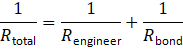
Even a small share of that current can cause involuntary muscular reaction (15mA or 0.015A) and loss of control, exactly when the engineer is handling gas pipework.
Voltage-only testing cannot reveal this risk. Current measurement does.
Arc and Thermal Risk: Current Dominates the Danger
Arc energy:
Thermal damage:

Current is squared. Voltage is not.
This is why arc‑rated PPE is recommended even in domestic environments – because current, not voltage, drives the hazard. (CAT2 PPE).
The Legal Framework Already Requires This
GSIUR, HSWA, MHSWR, EAWR, BS EN 50110‑1 and BS EN ISO 14118 all require engineers to identify electrical hazards before purging.
Voltage only testing does not meet that requirement. Current measurement does.
Current Measurement Is the Trigger for Further Investigation
If current is detected, someone must investigate:
- Diverted Neutral Current (DNC)
- Neutral-to-Earth faults (NDC)
- Network Earth Touch Current (NET)
- Bonding integrity
- Equipotential stability
- Whether electrical isolation is required
“Current measurement exposes what voltage hides.”
This is the really critical message: Voltage-only testing hides dangerous electrical conditions. Current measurement reveals them.
The Reality: If the Volt Pen Stays Silent but 10 A Is Flowing
Example:
- Volt pen silent
- 10 A flowing
- Assume 11 V neutral‑to‑earth
- Interruption time 0.01 s

“1.1 joules of energy released is more than enough to produce a visible spark.”
This is the really important truth: The volt pen stayed silent. The voltage appeared safe. But the energy was easily enough to ignite gas.
This is why current measurement should not be optional. It should be part of the process of protecting persons, livestock and property.
Current Measurement Is the Only Way to Know the Actual Ignition Risk
Voltage tells you pressure. Current tells you flow. Energy tells you danger.
If you don’t measure current, you cannot calculate energy. If you cannot calculate energy, you cannot assess ignition risk.
This is the really essential conclusion: You MUST measure current as well as voltage. Voltage-only testing is blind. Current measurement is the only way to know whether the installation can produce a spark combined with voltage detection.
What to do!
Example:
- Volt pen silent
- 10 A flowing
- Assume 11 V neutral‑to‑earth
- Interruption time 0.01 s
“1.1 joules of energy released is more than enough to produce a visible spark.”
This is the really important truth: The volt pen stayed silent. The voltage appeared safe. But the energy was easily enough to ignite gas.
This is why current measurement should not be optional. It should be part of the process of protecting persons, livestock and property.
Current Measurement Is the Only Way to Know the Actual Ignition Risk
Voltage tells you pressure. Current tells you flow. Energy tells you danger.
If you don’t measure current, you cannot calculate energy. If you cannot calculate energy, you cannot assess ignition risk.
This is the really essential conclusion: You MUST measure current as well as voltage. Voltage-only testing is blind. Current measurement is the only way to know whether the installation can produce a spark combined with voltage detection.
1. Put on the required PPE
The minimum legal PPE for gas work:
- Safety boots
- Gloves
- Eye protection
- Flame retardant clothing (recommended)
- Hi vis if required by site rules
- Gas Safety (Installation and Use) Regulations 1998 (GSIUR)
GSIUR requires gas work to be carried out safely and by competent persons. While it does not list PPE items, it legally requires:
- Prevention of danger
- Safe working practices
PPE is part of meeting that requirement.
- HSWA demands safe working practices.
- PPE Regulations demand proper protective equipment.
- PUWER demands safe use of tools and equipment.
- MHSWR demands risk assessments that identify PPE needs.
- GSIUR demands prevention of danger during gas work.
2. Present yourself to the client / duty holder (person of authority)
- Identify yourself.
- Show your Gas Safe ID if requested.
- Confirm the job and the section of pipework involved.
- Confirm who is the responsible person on site.
- Hi vis if required by site rules
- Gas Safety (Installation and Use) Regulations 1998 - GSIUR
It requires:
Regulation 3 - Qualification and Competence
Only a Gas Safe registered person may carry out gas work. To prove this, you must be able to identify yourself and show your Gas Safe ID when asked.
Regulation 6 & 7 - Prevention of Danger
Before starting work, you must confirm:
- What work is being done
- Where it is being done
- Who is responsible for the premises This ensures the work is authorised and safe.
Gas Safe Register Rules of Registration
These are legally enforceable conditions of registration. They require:
- Engineers must carry their Gas Safe ID card
- Engineers must show it when requested
3. Obtain permission to work
Legally required under GSIUR and PUWER:
- Get access permission.
- Confirm you are authorised to isolate the gas supply.
- Confirm you are authorised to isolate electrically
- Confirm you are authorised to purge gas on the premises.
If commercial/industrial:
- You MUST obtain a permit to work.
- Gas Safety (Installation and Use) Regulations 1998 — GSIUR
Regulation 3 - Competence
You must be authorised and competent to carry out gas work. This means you cannot legally begin work until the duty holder has confirmed you are permitted to do so.
Regulation 6 - General Safety
You must take steps to prevent danger. This includes:
- Getting permission to access the gas installation
- Confirming you are authorised to isolate the gas
- Confirming you are authorised to purge gas
You cannot legally isolate or purge without the duty holder’s consent.
Regulation 7 - Preventing Gas Escape
Before isolating or purging, you must ensure:
- The responsible person knows what you are doing
- You have permission to interrupt or alter the gas supply
This is why “permission to work” is legally required.
Permit to Work Systems (Commercial/Industrial Sites)
Permit‑to‑work systems are legally required under:
- HSWA 1974 – Requires safe systems of work.
- MHSWR 1999 – Requires formal control of high‑risk activities.
- PUWER 1998 – Requires controlled use of hazardous equipment.
- GSIUR 1998 – Requires controlled work on gas systems.
This is why commercial and industrial sites MUST issue a permit‑to‑work before you isolate or purge gas.
A permit‑to‑work is not optional, it is a legal control measure. A domestic gas engineer does NOT need a formal permit‑to‑work, but they DO need permission from the person in control of the premises before isolating or purging gas. This is still a legal requirement under GSIUR, HSWA, MHSWR, and Gas Safe rules.
4. Conduct a site safety assessment
You must legally assess:
- Ventilation
- Ignition sources
- Escape routes
- Location of ECV and isolation valves
- Whether purging can be done safely outdoors
- Whether a purge stack is required
- Whether nitrogen is required (large systems)
If any hazard cannot be controlled → you cannot legally proceed.
- Gas Safety (Installation and Use) Regulations 1998 - GSIUR
It directly governs the safety assessment.
Regulation 6 - General Safety
You must take all reasonably practicable steps to prevent danger. This legally requires you to assess:
- Ventilation
- Ignition sources
- Escape routes
- Whether purging can be done safely
- Whether nitrogen is required
- Whether a purge stack is required
If any hazard cannot be controlled → you cannot legally proceed.
Regulation 7 - Preventing Gas Escape
Before isolating or purging, you must ensure the environment is safe. This includes:
- Checking for ignition sources
- Ensuring safe discharge of gas
- Ensuring the purge point is outdoors
- Ensuring the area is clear of people
This regulation legally forces you to carry out a site safety assessment.
You must legally assess ventilation, ignition sources, escape routes, purge safety, purge stack need, and nitrogen need because:
- GSIUR – requires prevention of danger
- HSWA – requires safe systems of work
- MHSWR – requires risk assessments
- PUWER – requires safe use of equipment
- IGEM/UP/1 & UP/1A – require full hazard assessment before purging
5. Identify the gas installation layout
You must:
- Locate the ECV
- Locate any secondary isolation valves
- Identify the section to be purged
- Confirm pipe size (35mm = UP/1)
This determines which IGEM standard applies.
- Gas Safety (Installation and Use) Regulations 1998 - GSIUR
Regulation 6 - General Safety
You must take all reasonably practicable steps to prevent danger. This legally requires you to:
- Locate the ECV
- Locate any secondary isolation valves
- Identify the exact section of pipework you will work on
- Confirm pipe size to determine the correct purging method
If you do not identify the layout correctly, you cannot legally ensure safety.
Regulation 7 - Preventing Gas Escape
You must ensure that any work on gas pipework does not cause gas escape. To comply, you must:
- Know exactly which section is being purged
- Know where isolation points are
- Know the pipe size to apply the correct purge method
This regulation directly governs layout identification.
Regulation 3 - Competence
You must be competent to work on the specific installation. Competence includes:
- Understanding the layout
- Knowing the pipe sizing
- Knowing which IGEM standard applies
If you cannot identify the layout, you are not competent to proceed.
You must locate the ECV, secondary valves, purge section, and pipe size because:
- GSIUR – requires prevention of danger and correct isolation
- HSWA – requires safe systems of work
- MHSWR – requires risk assessment
- PUWER – requires safe use of equipment
- IGEM/UP/1 & UP/1A – require layout identification before purging
6. DNC/NDC/NET current detection.
- Prove your contact voltage indicator pen is functioning
- Test the incoming service head for tracking
- Re-prove your contact voltage indicator
- Place a Current transformer ammeter around the main incoming earth and note the current reading.
7. Electrical isolations
- Gain permission to turn off electrical supplies from a person of authority.
- Why you MUST get permission
Because you do not own or control the electrical installation. Only the duty holder (the person responsible for the premises or system) has the legal authority to allow you to:
- turn off electrical supplies
- isolate circuits
- interrupt power to equipment
- affect other workers, processes, or safety systems
If you isolate without permission, you can:
- shut down critical equipment
- stop heating, pumps, alarms, medical devices
- expose other workers to danger
- cause business interruption
- become legally liable under EAWR and HSWA
- Determine the correct circuit to isolate.
FURTHER GUIDANCE – BS7671 states:- Regulation 514.9.1 – Circuit identification This regulation states that every circuit must be clearly and durably labelled so it can be identified without ambiguity. This might not always be the case.
By turning the Over Current Protective Device off for the circuit and seeing the equipment de-energise, turning the OCPD back on, seeing the equipment re-energise and turning the OCPD back off again and witnessing it de-energise, means you have seen that OCPD de energise the equipment twice
- Once the correct circuit is determined lock off and tag out the OCPD
FURTHER GUIDANCE – BS 7671 does NOT specify the exact lock‑off device you must use. The requirement comes from BS EN 60204‑1 and BS EN ISO 14118 (formerly EN 1037).
These are the standards that define:
- Prevention of unexpected start‑up
- Isolation procedures
- Lock‑off devices
- Tag‑out systems
- Padlocks, hasps, lockable isolators
BS EN ISO 14118 Safety of machinery – Prevention of unexpected start‑up
This is the core standard that requires physical isolation + locking + tagging.
BS EN 60204‑1 Safety of machinery – Electrical equipment of machines. This specifies that isolation devices must be lockable and secured against reconnection.
BS EN 50110‑1 – Operation of electrical installations. This covers safe working, isolation, proving dead, and locking off.
- Always keep the key for the padlock within your possession
- Put on your PPE and ensure the correct control measures are in place.
FURTHER GUIDANCE – In a 3 phase environment this should be mandatory, in a single phase environment recommended.
CAT 2 PPE (Arc‑rated PPE for 8 cal/cm²) is designed for low‑level arc flash environments, which is exactly what a domestic DB represents.
Protection against arc flash thermal energy
If a tool slips and creates a fault:
- CAT 2 arc‑rated clothing prevents second‑degree burns
- Protects against molten copper particles
- Reduces injury from small arc events
Insulated gloves reduce shock risk
When working near live ways:
- Gloves prevent accidental contact with live terminals
- Reduce risk from neutral touch voltage
- Provide protection if CPC or metalwork becomes energised
Eye and face protection
Arc‑rated face shield or goggles:
- Protect against arc flash light
- Prevent eye injury from molten metal
- Stop debris from busbar or terminals
Insulated tools + CAT 2 PPE = controlled environment
Insulated tools alone are not enough. CAT 2 PPE ensures:
- If a tool bridges live parts, the engineer is protected
- Clothing won’t ignite
- Hands, arms, torso protected from thermal energy
- Remove the cover of the distribution board
- Take your voltage proving unit and ensure your device is functioning correctly
FURTHER GUIDANCE – What GS38 means for a plumber
- Your voltage tester must be the right type (proper 2‑pole tester, not a neon screwdriver or pen).
- The probes must have:
- Finger guards
- Insulated tips (only 4 mm metal showing)
- Strong insulated leads
- You must follow test – prove – test:
- Test your voltage tester on a known live source
- Test the circuit you’re isolating
- Test the tester again afterwards
- SINGLE PHASE – test between
- Live and Neutral
- Live and Earth
- Neutral and Earth
- THREE PHASE – test between
- L1 and Earth
- L2 and Earth
- L3 and Earth
- L1 and Neutral
- L2 and Neutral
- L3 and Neutral
- L1 and L2
- L2 and L3
- L3 and L1
- Neutral to Earth
If the circuit is single phase in a three phase distribution board and sharing a neutral with other circuits, this could pose a risk.
- Complete the sequence of tests to confirm the circuit you are intending to work on is DENERGISED
- Open the local double, triple OR four pole isolator, this will disconnect the neutral line if wired correctly.
- SINGLE PHASE – test between
FURTHER GUIDANCE – When isolating equipment, disconnect ALL conductors- including neutral, so the equipment cannot be energised by a DNC fault.
EAWR 1989 (Electricity at Work Regulations)
Regulation 12 - Work on dead equipment
You must ensure the equipment cannot become live while you are working on it.
Removing the neutral ensures the equipment cannot become live due to:
- Faulted PME
- Shared neutrals
- Parallel paths
- Diverted current
BS EN 50110 1 (Operation of Electrical Installations)
This standard governs safe isolation procedures.
It states:
- Equipment must be completely separated from all live conductors
- Isolation must prevent any possibility of energisation
- Neutral must be isolated if it can carry dangerous voltage
8. Confirm the installation is safe to work on
- Ensure no appliances are running
- Ensure no vulnerable persons are at risk
- Ensure no hot works or ignition sources are present
- Ensure the purge discharge point is safe and outdoors
- Gas Safety (Installation and Use) Regulations 1998 - GSIUR
Regulation 6 - General Safety
You must take all reasonably practicable steps to prevent danger. This legally requires you to check:
- No appliances are running
- No ignition sources
- No vulnerable persons are at risk
- The purge discharge point is safe and outdoors
If any of these conditions are unsafe → you cannot legally proceed.
Regulation 7 - Preventing Gas Escape
You must ensure that any work on gas pipework does not cause gas escape or danger. This regulation legally requires:
- Ensuring appliances are off
- Ensuring no ignition sources are present
- Ensuring safe discharge of gas outdoors
- Ensuring the area is safe for purging
IGEM/UP/1 and IGEM/UP/1A (Legally Recognised Standards)
These standards are legally recognised under GSIUR as the correct method for purging.
They require you to confirm:
- Appliances are off
- No ignition sources
- No vulnerable persons in the purge zone
- Purge discharge point is outdoors
- Area is safe for purging
Failure to follow IGEM standards IS A breach of GSIUR.
You must ensure appliances are off, ignition sources controlled, vulnerable persons protected, and purge discharge outdoors because:
- GSIUR requires prevention of danger
- HSWA requires safe systems of work
- MHSWR requires risk assessment
- PUWER requires safe use of equipment
- IGEM/UP/1 & UP/1A require full safety checks before purging
9. Prepare purge equipment
You must have:
- A Gas analyser
- A Purge stack (or safe discharge point)
- Ventilation equipment if needed
- Communication equipment
- LOTO equipment (lock + tag)
-
Tools for tightness testing
- Digital or analogue manometer
- Test nipple adaptor / test point connector
- Approved leak detection fluid (LDF)
- Temporary test gauge / temporary test rig
- Pipework end caps / blanking plugs
- Isolation tools (spanners, valve keys, etc.)
- Stopwatch or timer
- Calculator / pressure‑drop charts (IGEM/UP/1A or BS 6891)
- Gas Safety (Installation and Use) Regulations 1998 — GSIUR
Regulation 6 - General Safety
You must take all reasonably practicable steps to prevent danger. This legally requires you to have the correct equipment ready before you isolate or purge gas.
This includes:
- Gas analyser (to monitor gas concentration)
- Purge stack / safe discharge point
- Ventilation equipment
- Communication equipment
- LOTO equipment
- Tightness‑testing tools
If you do not have the correct equipment → you cannot legally proceed.
Regulation 7 - Preventing Gas Escape
You must ensure that any work on gas pipework does not cause gas escape or danger. This legally requires:
- Gas analysers to confirm safe gas levels
- Purge stacks to safely discharge gas outdoors
- Ventilation equipment to prevent accumulation
- LOTO equipment to prevent accidental re‑energising
PUWER - Provision and Use of Work Equipment Regulations 1998
PUWER legally requires:
- Equipment to be suitable
- Equipment to be maintained
- Equipment to be used safely
- Only competent persons to use equipment
This applies directly to:
- Gas analysers
- Purge stacks
- Ventilation equipment
- Communication devices
- LOTO equipment
- Tightness‑testing tools
IGEM/UP/1 and IGEM/UP/1A (Legally Recognised Standards)
These standards are legally recognised under GSIUR as the correct method for purging.
They require you to have:
- Gas analyser
- Purge stack
- Ventilation equipment
- Communication equipment
- LOTO
- Tightness‑testing tools
Failure to follow IGEM standards IS A breach of GSIUR.
You must legally prepare purge equipment because:
- GSIUR requires prevention of danger
- HSWA requires safe systems of work
- MHSWR requires risk assessments and control measures
- PUWER requires safe, suitable equipment
- IGEM/UP/1 & UP/1A require specific purge equipment
If any required equipment is missing THEN you cannot legally begin the purge.
10. Brief the client / duty holder
You must explain:
- You will isolate the gas
- You will lock off the gas main
- You will purge gas safely outdoors
- No one may interfere with the isolation
- No appliances may be used during the purge
- Gas Safety (Installation and Use) Regulations 1998 — GSIUR
Regulation 6 - General Safety
You must take all reasonably practicable steps to prevent danger. This legally requires you to inform the person in control of the premises about:
- Gas isolation
- Lock‑off
- Purging outdoors
- Prohibition of appliance use
- Prohibition of interference with isolation
If you do not brief the client/duty holder, you cannot legally prove you took steps to prevent danger.
Regulation 7 - Preventing Gas Escape
You must ensure that your work does not cause gas escape or danger. This regulation legally requires:
- Informing the duty holder that gas will be isolated
- Informing them that the main will be locked off
- Informing them that gas will be purged outdoors
- Ensuring they understand not to operate appliances
- Ensuring they understand not to touch isolation valves
Gas Safe Register Rules of Registration
These rules are legally enforceable conditions of registration. They require:
- Clear communication with the person in control of the premises
- Explanation of the work being carried out
- Ensuring the client understands safety implications
- Ensuring the client understands restrictions (e.g., no appliance use)
This directly governs the briefing process.
IGEM/UP/1 and IGEM/UP/1A (Legally Recognised Standards)
These standards require:
- Informing the duty holder of isolation
- Informing them of lock‑off
- Informing them of purge discharge outdoors
- Ensuring they understand not to interfere
- Ensuring they understand not to operate appliances
Failure to follow IGEM standards IS A breach of GSIUR.
You must legally brief the client/duty holder because:
- GSIUR Reg 6 & 7 require communication to prevent danger
- HSWA requires safe systems of work and hazard communication
- MHSWR requires risk‑control communication
- Gas Safe rules require explanation of work and safety implications
- IGEM/UP/1 & UP/1A require briefing before purging
11. Clear the work area
You must:
- Remove public / staff from the area
- Ensure no ignition sources
- Ensure safe access to the ECV
- Ensure safe access to the purge point
- Gas Safety (Installation and Use) Regulations 1998 - GSIUR
Regulation 6 - General Safety
You must take all reasonably practicable steps to prevent danger. This legally requires you to:
- Remove public/staff from the work zone
- Eliminate ignition sources
- Ensure safe access to the ECV
- Ensure safe access to the purge point
If any of these conditions are unsafe → you cannot legally proceed.
Regulation 7 - Preventing Gas Escape
You must ensure your work does not cause gas escape or danger. This regulation legally requires:
- Keeping people away from the purge zone
- Ensuring no ignition sources are present
- Ensuring safe discharge of gas outdoors
- Ensuring clear access to isolation points
This directly governs clearing the work area.
IGEM/UP/1 and IGEM/UP/1A (Legally Recognised Standards)
These standards require:
- Clearing the purge zone
- Ensuring no ignition sources
- Ensuring safe access to isolation valves
- Ensuring safe access to purge discharge points
Failure to follow IGEM standards IS A breach of GSIUR.
You must remove people, eliminate ignition sources, and ensure safe access because:
- GSIUR – requires prevention of danger
- HSWA – requires safe systems of work
- MHSWR – requires risk assessment and hazard control
- PUWER – requires safe use of equipment
- IGEM/UP/1 & UP/1A – require a cleared, safe purge zone
12. Confirm competence
Legally required:
- You must be Gas Safe registered
- You must be competent in purging (specialist category)
If not → you cannot legally isolate or purge.
- Gas Safety (Installation and Use) Regulations 1998 — GSIUR
Regulation 3 — Qualification and Competence
This is the primary legal requirement.
It states:
- Only a competent person may carry out gas work.
- Competence is defined as having appropriate training, experience, knowledge, and ability.
- In the UK, competence is demonstrated by Gas Safe registration.
This means:
- You must be Gas Safe registered.
- You must hold the correct purging competencies (UP/1A or UP/1).
- If you are not competent → you cannot legally isolate or purge gas.
Gas Safe Register Rules of Registration
These rules are legally enforceable conditions of registration.
They require:
- Engineers to be Gas Safe registered
- Engineers to hold the correct categories of work
- Engineers to work within the scope of their competence
- Engineers to not carry out work they are not qualified for
Purging is a specialist category, so you must hold the correct qualification.
IGEM/UP/1 and IGEM/UP/1A (Legally Recognised Standards)
These standards are legally recognised under GSIUR as the correct method for purging.
They require:
- Purging to be carried out by competent persons only
- Competence to include training, experience, and knowledge of purging procedures
- Engineers to understand the hazards, equipment, and gas behaviour involved
Failure to follow IGEM standards IS A breach of GSIUR.
You must be Gas Safe registered and competent in purging because:
- GSIUR Reg 3 legally requires competence
- HSWA requires safe systems of work
- MHSWR requires competent persons for hazardous tasks
- Gas Safe rules require correct categories of work
- IGEM/UP/1 & UP/1A require purging to be done by trained specialists
If you are not competent → you cannot legally isolate or purge gas.
13. You are now legally allowed to begin Step 1 of the purge procedure
This means you can now:
- Isolate the gas supply
- Lock off the gas main
- Begin tightness testing
- Start the purge sequence